Free and Easy Recycling, Reuse it

Freecycling: How We Can All Save Items From Landfill

Although many people have never heard of the organization, Freecycle is one of the best ideas to come along in quite a while, especially for people who are doing their best to live frugally and save the Earth’s resources. Located at http://www.freecycle.org, this group encourages its members to share items they plan to discard with someone else rather than sending it to the dump. Any objects that still have some life left in them and are safe for use may be offered to the group through an email list. Each Freecycle group has one or more moderators who help with organization, administration, and enforcement of the rules.

Freecycle participants have been known to offer the following useful objects which can be easily restored to a useful state:

• Chairs, Couches and Loveseats

• Dining Room Tables, Coffee Tables and End Tables

• Bookcases and Desks

• Baby Furniture such as Changing Tables and Bureaus

• Beds and Mattresses

• Entertainment Centers

Because most people are considering throwing furniture away because it has been damaged in some way or is no longer stylish, these are minor issues for creative, crafty folks. Chairs, couches, and loveseats, for example, may be stained or torn, but some slipcovers can take care of these problems quickly and easily. As long as the furniture obtained through Freecycle is structurally intact, it can be as inviting when restored as new furnishings would be. Just think of how clean and modern these old cast-offs will look when covered in bright, cheerful stretch slipcovers!

Tables offered by Freecycle members may have some chips, water stains, scratched surfaces, or loose joints, but most can be handily repaired. Afterwards, a beautiful tablecloth can hide any lingering evidence of damage. If the problems are not severe, wooden furniture may be sanded down and repainted. Stenciling can also hide a multitude of problems and is a fun way to change the look of any table.

Bookcases and desks may be restored or distressed by adding more damage. If an antique look matches the décor of your room, just use an ice pick and hammer to add more damage. Follow this with a new coat of stain, and neighbors will swear that you paid a big price for an antique while you actually saved several trees from being destroyed and some space in the local landfill.

Freecycle is very careful about allowing its members to give away baby items, and different areas have a variety of rules. It is important to the members of this conscientious group that all items recycled have never been recalled or damaged in such a way as to sacrifice safety. It is possible, however, to pick up some great finds for a baby’s room. By adding a few decals or stickers, these can be cute and trendy.

Freecycle is certainly the organization for people wishing to do all they can to support recycling efforts. By working together, this group is making a real impact all over the world.

This was a guest post from Caroline Smith.

Tech Companies Make Push For Home Energy Efficiency

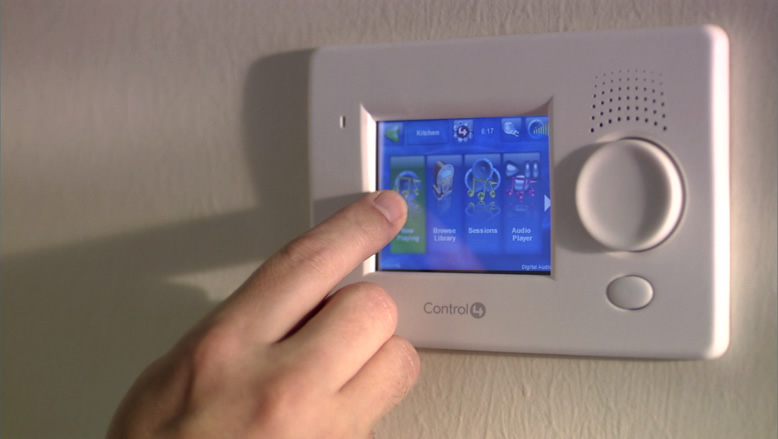
Microsoft Hohm is an online service that makes it possible for consumers to see how much electrical power and gas they use in a given month along with suggestions on how to reduce their consumption.

This application was recently updated with some new features including two dozen behavior recommendations for those who take the time to create a Hohm energy profile and information pages covering every zip code in the United States. Additionally, Hohm now features an energy breakdown dashboard that gives more thorough information about where your household is using the most energy.

Microsoft is not alone in their home energy efficiency efforts. A group of appliance and energy companies that includes Best Buy, Direct Energy, Lennox International, OpenPeak and Whirlpool are working on what they call the Home Energy Management Center. What makes this effort distinctive is that it focuses on homes of all income levels rather than the middle or upper class approach that most other companies are taking.

The Home Energy Management Center is being described as a “command center” for the smart home. It will allow them to manage their energy consumption according to certain predetermined budget levels or operating limits as well as provide access to news, weather, social networking, music and movie applications. It is projected that consumers will be able to save up to 25% on their energy bill every month.

Another company taking a very unique approach to home energy efficiency is EcoFactor. Their system will merge your home energy consumption with information about environmental conditions. The thought behind this system is that the consumer does not necessarily want the temperature of their house set to the same level everyday. The temperature outside may not change very much day to day, but the same temperature can feel different depending on how much moisture is in the air.

These are just a few of the companies that are working hard to cut down home energy consumption. The hope is that in the coming years a wide variety of systems will make it possible for everyone to watch their energy usage regardless of whether or not they can meet the expense of home automation.

This was a guest post from Richard Moyle

For more about monitoring home energy usage visit www.measurementsystems.co.uk

The Benefit of ceiling fans

Hugger style ceiling fans can save you a lot of money normally spent on air conditioning.

It is not just about have air blowing on you to keep cool, it is also very helpful when used in conjunction with an air conditioner to quickly and efficiently cool your house.

Keep cool and save money this summer with great deals!

click here to find fans in Hollywood, CA

LED part two

A while back I wrote a post on how LEDs might suck because my personal experience with them has been bad.

Well I’ve done the research and it seems clear that all lighting will eventually be LED lighting.  My father just built a house lighted entirely with LEDs and his electric bill is ridiculously low. The problem at the moment is that there are a lot of poor quality LEDs coming out of places like China.

It is also very difficult to tell quality from crap just by looking so I would go by price. An LED bulb with room lighting capabilities will be about 3-4 dollars apeice.   The investement is worth it for the lower electric bill plus you won’t have to change bulbs for more than ten years.

I reccomend Cree Lighting Products, particularly their xlamp series.

Edison’s incandescent bulbs take standard 60 watts

Compact flouesent take maybe half that about 20-30 watts

For the same amout of white light emitted (lumens) an LED takes 5-10 watts

led-light-bulb

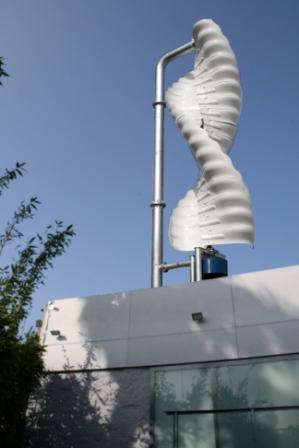
Multi-directional wind turbines for the home. Vertical Axis Wind Turbine VAWT

Vertical Axis Wind Turbines VAWT.  These have been around for a while but no one design or company has really taken off.

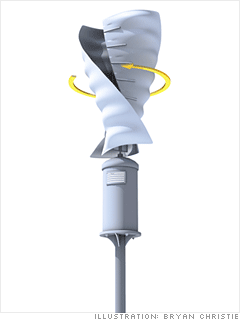
The most efficient ones are generally shaped like a helix so that it spins no matter what direction the wind is blowing.  One significant problem with the standard large windmill design is they only work well if the wind is blowing hard and steadily in one direction.  There are places with those conditions but they are not exactly abundant.

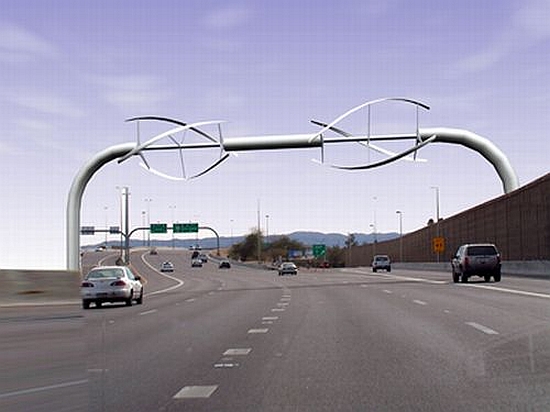
The VAWT work on a different kind of wind. They could be effective on a small scale and could be owned privately like solar panels.  The other probably more untactful use would be to put them on the top and sides of skyscrapers.

As anyone who has stood on a NYC rooftop can tell you, the wind coming up from the street is srong and constant so attaching turbines could ease the electric demand where it is most needed.

The future of energy storage

What is the best way to store energy in the long run?

and by long run I mean after all the fossil fuels have been used up.

Batteries
It is safe to say that eventually the power we get will originate as electricity whether from geothermal, solar, or wind (I exclude bio-fuels because it is not a long term energy solution and should be abandoned at some point)
Electricity isn’t very portable though, very difficult to pick up and carry. Batteries are the traditional way to store direct current but with the current design of a battery, I don’t think we have enough battery making material to hold the energy we need. There have been some developments in Supercapcitor technology that would greatly help the battery problem but I think there is probably a better solution.

My suggestion would be hydrogen.  Use electricity to separate water into hydrogen and oxygen (hydrolysis) and when hydrogen is used as fuel the only by-product is water. (I’m sure many of us did this experiment in high school)

The first element, from which all other elements descend, hundreds of times more abundant than any other substance.

Let’s take advantage.

hydrogen_gen1

Earth Hour 2009: seeing at night

Here in Los Angeles I couldn’t tell that anyone had turned their lights off but HERE are some great pictures.

I would be interested to know if anyone saw the stars?

earth-hour-to-financial

LED lights, Theory vs Practice

LED technology is the current favorite for lighting in the future. They use less energy than fluorescent lights and can emit more pleasing light.  They also in theory do not need to be replaced for many years.

I worked at a hardware and furniture store when I was in college and we carried many different LED desk lamps over the years.  That experience showed me that LED light bulbs break all the time and are often very difficult to replace.

Now it is certainly possible that these were cheap lights not on par with the LEDs of today but given the simple construction of the diode, I don’t think it should matter.

I understand why in theory these light would last longer, IE there is no filament to burn out etc.   So are some types just better than others?

led