A short discussion of Cap and Trade

cap_and_trade_article
Emissions trading (or emission trading) is an administrative approach used to control pollution by providing economic incentives for achieving reductions in the emissions of pollutants. It is sometimes called cap and trade.
A central authority (usually a government or international body) sets a limit or cap on the amount of a pollutant that can be emitted. Companies or other groups are issued emission permits and are required to hold an equivalent number of allowances (or credits) which represent the right to emit a specific amount. The total amount of allowances and credits cannot exceed the cap, limiting total emissions to that level. Companies that need to increase their emission allowance must buy credits from those who pollute less. The transfer of allowances is referred to as a trade. In effect, the buyer is paying a charge for polluting, while the seller is being rewarded for having reduced emissions by more than was needed. Thus, in theory, those that can easily reduce emissions most cheaply will do so, achieving the pollution reduction at the lowest possible cost to society.
It’s not every day we get to invent a commodity…
TeamLDCO (6:46:36 PM): do you have a post about cap and trade anywhere in your blog?
IRAHit (6:48:59 PM): no
IRAHit (6:49:09 PM): that’s a good idea though
TeamLDCO (6:49:23 PM): are you for or against it?
IRAHit (6:50:39 PM): well it seems to be working in europe as another commodities market
TeamLDCO (6:50:53 PM): hmm
TeamLDCO (6:51:16 PM): then why do conservatives say its a failure if it’s working?
IRAHit (6:51:24 PM): but it might put the US at a disadvantage
IRAHit (6:51:37 PM): they say it won’t work in the states
IRAHit (6:52:38 PM): cause china india africa south america ain’t capping shit
IRAHit (6:53:39 PM): we could pay a heavy price for being green
IRAHit (6:53:58 PM): though in the long term it would pay off
TeamLDCO (6:54:14 PM): thats what i think too
TeamLDCO (6:54:30 PM): so republicans don’t want to pay the initial costs
IRAHit (6:56:02 PM): well they seem to have less of a concern about global warming
IRAHit (6:56:14 PM): but yeah basically
IRAHit (6:56:52 PM): when the oil runs out we will be glad we have a sustainable energy infrastructure
TeamLDCO (7:00:13 PM): and
TeamLDCO (7:00:17 PM): at the current pace
TeamLDCO (7:00:24 PM): oil will be gone in our children’s lifetime
IRAHit (7:00:59 PM): probably ours
TeamLDCO (7:01:07 PM): geez

Interactive renewable energy map

NRDC Map

This is an interesting little tool showing the potential energy of different parts of the US.

also more on this later but

“Several types of energy resources and specific technologies used to capture these resources claim to be renewable, despite either relying on dirty fossil fuel energy resources or creating other pollution hazards in the process. Following are three often-cited resources whose proponents claim are renewable but in fact they are not:

  • Coal waste from coal mining
  • Methane gas from coal mines
  • Waste-to-Energy (WTE) facilities, i.e. waste incineration”

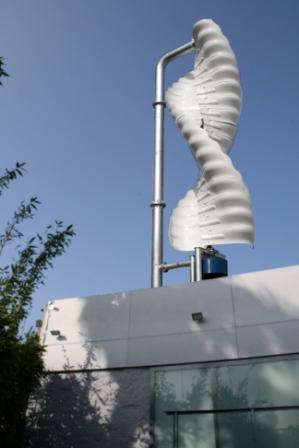
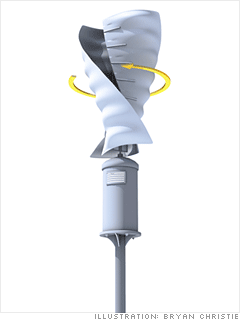
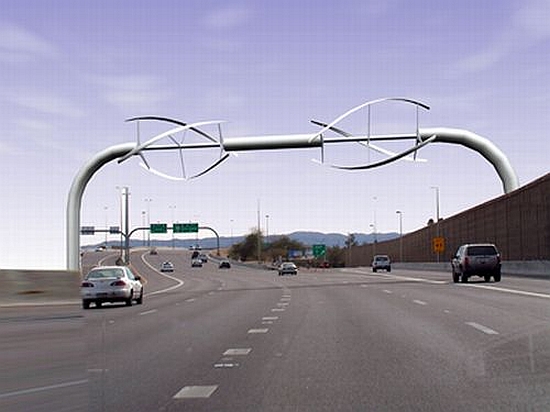
Multi-directional wind turbines for the home. Vertical Axis Wind Turbine VAWT

Vertical Axis Wind Turbines VAWT.  These have been around for a while but no one design or company has really taken off.

The most efficient ones are generally shaped like a helix so that it spins no matter what direction the wind is blowing.  One significant problem with the standard large windmill design is they only work well if the wind is blowing hard and steadily in one direction.  There are places with those conditions but they are not exactly abundant.

The VAWT work on a different kind of wind. They could be effective on a small scale and could be owned privately like solar panels.  The other probably more untactful use would be to put them on the top and sides of skyscrapers.

As anyone who has stood on a NYC rooftop can tell you, the wind coming up from the street is srong and constant so attaching turbines could ease the electric demand where it is most needed.

The future of energy storage

What is the best way to store energy in the long run?

and by long run I mean after all the fossil fuels have been used up.

Batteries
It is safe to say that eventually the power we get will originate as electricity whether from geothermal, solar, or wind (I exclude bio-fuels because it is not a long term energy solution and should be abandoned at some point)
Electricity isn’t very portable though, very difficult to pick up and carry. Batteries are the traditional way to store direct current but with the current design of a battery, I don’t think we have enough battery making material to hold the energy we need. There have been some developments in Supercapcitor technology that would greatly help the battery problem but I think there is probably a better solution.

My suggestion would be hydrogen.  Use electricity to separate water into hydrogen and oxygen (hydrolysis) and when hydrogen is used as fuel the only by-product is water. (I’m sure many of us did this experiment in high school)

The first element, from which all other elements descend, hundreds of times more abundant than any other substance.

Let’s take advantage.

hydrogen_gen1