So can’t we just pipe the oil to where we need it?


You can do whatever you want but you might want to step back and make sure it’s a good idea.

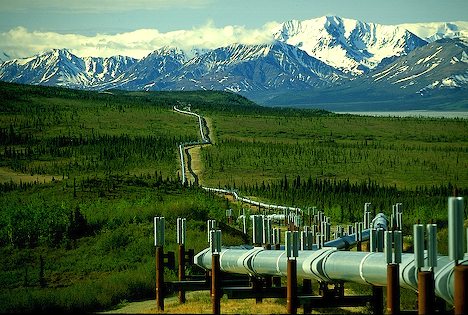
The US is probably going to build a pipeline from Canada down to the gulf of mexico.  As you can imagine this is a source of concern for people living anywhere near this pipe.  This seems reasonable because transporting large amounts of toxic liquid great distances is inherently dangerous.  Trucks crash, boats sink, rigs explode, and pipes leak.  It is included in the cost of doing business.

Proponents argue that the project will create jobs and decrease our reliance on foreign oil.  How many and how permanent these jobs will be is still under debate.  Also we will be relying on foreign oil until it runs out or we find a cheaper alternative so I wish people would stop using that phrase.

The pipeline will be the equivalent of building a giant highway across the country that no one can drive on and poisons the drinking water.  So as of right now we will have to wait for the 2012 elections because god knows politicians can’t do ANYTHING while they are trying trick people into voting for them.

Update from the Republic of Khakassia Abakan Siberia

The first session of working group concerning the lands protection and restoration

The Republican Development Council at the Head of the Republic of Khakassia was established in 2010 in order to assist the development of social and economic potential of our republic and to improve the well-being of citizens. The Head of the Republic of Khakassia is the Chairman of the Development Council. The pressing issues of various spheres of Khakass economy, industry, ecology and public life are being submitted for the Council Presidium’s consideration. The special working groups are created for studying these questions and developing the mechanisms of their solving. They consist of the representatives of various Khakass organizations and departments, public figures of our republic.

The problem of lands protection and restoration is one of the most serious problems, worrying not only the citizens of Khakassia, but also the heads of various levels. The research of this issue was entrusted to the Khakass Ecological “Live planet” Fund. The representatives of the Legacy Committee of the Republic of Khakasia, the Ministry of Agriculture, the State Committee on the Khakass Fauna and Environment Protection, the Federal Service for Veterinary and Phytosanitary Surveillance of Khakasia, the “Khakassky” State Natural Reserve and the Institute of Agrarian Problems of Khakasia were included in the working group on the question of lands protection and restoration.

The general questions of lands protection were discussed at the first session of working group; that is, the problems of ownerless lands, farmlands salification and desertification. The question of farmlands pollution with solid domestic wastes was raised on the proposal of the State Committee on the Khakass Fauna and Environment Protection. There is a large quantity of illegal dumps on the territory of farmlands. The size of them continues to increase as inhabitants of Khakasia have no place to throw out their garbage. There is only one legal refuse dump in Khakasia, while the area of the republic is 61 900 km2.

The low level of proficiency and ecological competence of farmland owners was also discussed. This problem caused a great concern of all the members of the working group. Since the ancient times the land was the main wealth of any state and a basis of the economic stability. In modern Russia farmlands are distributed to everyone who wants to be engaged in farming. Everyone has to pass the examination to obtain a driver’s license, but it is not necessary to take any examinations to obtain a license to rule the land. It means that everybody can be engaged in agriculture. Such management can result in the fertility decrease, soil exhaustion and desertification.

As a result of active discussions the working group defined three questions in order to search for the solution of them:

  1. The illegal dumps liquidation of the Khakass farmlands;

  2. The inventory and certification of the Khakass farmlands;

  3. The low skill level of Khakass farmland owners.

A great work on solving these problems should be carried out, as well-being of each person in his own hands. We shouldn’t forget – nothing exists by itself. The ecology of farmlands is inseparably connected with the ecology of the territories surrounding them, and the other way round. If any territory turns into a fruitless desert or a dead salty bog, the adjoining safe and protected territories will be under threat. Farming his own land, a person should raise his head and look around. Near by the farmlands, gardens and pastures the habitats of not only plants and animals, but also settlements of human beings are situated.

Elena Kim

Khakass Ecofund “Live Planet”

Green Vacation

Planning a Green Vacation

Everybody wants to do their part for the environment, but at the same time, we don’t want to stop living and doing the things we like and want to do out of fear of damaging the environment.

Travel is one particularly sensitive issue for anyone who is eco-friendly, because there are very few environmentally beneficial modes of travel available, and because, while traveling, there isn’t much we can control in the way of saving energy.

We are largely at the mercy of the options available to us, but that doesn’t mean that all hope is lost. With a little bit of research, you can reduce the size of your travel’s carbon footprint, and feel good knowing that you are supporting the environment, even while living the dream.

Consider looking into the following things when planning your next trip:

  • Alternative modes of travel, part I: While every kind of travel is environmentally taxing, some kinds are far less damaging than others. Cars are generally better than planes, for example, and trains are even better than cars. If it is possible to take a train to your next destination, do that instead and you’ll be able to rest easier knowing you did what you could. It might take a little longer, but it will be worth it.
  • Stay at green hotels: As a rule, a hotel will never be as energy efficient as a house, simply because they are so large and have so much space to light and heat or cool, but similar to the tiers of transportation, some are better than others. There are websites that list eco-friendly lodgings, which should be a great help when trying to decide. Some of these sites are:
    • It’sAGreenWorld.com
    • Eco Green Hotel
    • Eco Hotels of the World
  • Alternative modes of travel, part II: Once you have arrived at your destination, you have the option of several different kinds of transportation. These should be more familiar to you, because they are basic city transit options: cars, buses, bicycles, walking, horse carriage, etc. I probably don’t have to say (but I will anyway) that walking, bicycling, or taking a horse ride or more eco-friendly than cars or even riding on the bus; if you can plan to take these methods of transportation while you are vacationing, instead of renting cars or taking cabs, you’ll be helping to save the environment, and saving some cash, too.
  • Sight-see green: Another big source of energy consumption on vacations is the activities you do while there (wherever “there” happens to be). Try to plan green activities, such as eco-tourism, while out, instead of high energy activities like theme parks or movie theaters.

It will take a little extra planning to get your vacation to green status, but it isn’t impossible, and every little bit helps. Just think how much good we could do if every person planned green vacations!


Two pronged attack Energy Efficiency and Conservation

The total energy efficiency of the United States is less than 50% and the total amount of energy produced by oil and coal together is almost 75%.

Now let’s pretend we would like to put less carbon into the atmosphere and as a given oil and coal happen to be the sources that put most of the carbon into the air. If we could increase the overall efficiency by a quarter, we could use a third less carbon fuel.

So I guess the question is what are the obstacles to not wasting more than half of the energy we produce? Are the costs associated with such an endeavor so high that it is really not worth the investment?

Doing some research on fuels and their various efficiencies,  wood can burned generating heat energy at above 90% efficiency in the right kind of fireplace.  The technology for burning wood has been developed since the beginning of mankind but I still think we could still waste less energy with other fuels as well.

Circa 1940

The first great depression


Cap and Trade Infographic

I have been meaning to write an article on cap and trade in the United States but it can be hard for people to understand and without other major polluting countries having similar programs, the whole thing seemed somewhat pointless.

In the US, however, the program will have an effect on our poor sad economy and thus should be addressed.  I still don’t want to write about though, so here is a great ideographic from the people at http://www.wellhome.com


When is Green Technology Most Useful?


It’s a term that’s being bandied about regularly these days, and if you want to be perceived asdoing your bit for the environment, it goes without saying that you must be interested in allthings green as well. Green technology is all the rage today – if you’re not going green, you’reviewed as a villain by many. However, no matter how much you invest in green technology, it isuseless if you don’t change habits that have been ingrained in you from childhood and over thecourse of your life. Green technology is useful only when:

You utilize it efficiently: If you’ve invested in a solar panel yet insist on using your oldwater heater, if you’ve installed energy efficient appliances yet hold on to your oldrefrigerator and stove because they’re still in good working condition, or if your home isnaturally insulated/aired yet you insist on using air conditioners and heating units, thenyou’re not using green technology efficiently. Green technology works only when youoptimize its use and minimize your overall energy usage.You minimize waste: There’re no significant gains to be realized when you replace allthe lights in your home with CFL bulbs, yet fail to switch them off when you don’t needto use them. Minimizing energy costs is all well and good, but it’s still a waste whenyou use energy unnecessarily, even if you’re expending just the minimum. So when youinvest in and install green technology, ensure that you don’t use much more energythan you need – shut your computer down when you’re not going to be using it for afew hours; remove charging units from the socket and switch off the main when you’redone charging your devices, and use the main switch to turn the TV off instead of justpointing your remote at it.You adopt greener habits: You may have just bought a hybrid car, but that doesn’tmean you have to drive it even to the store around the corner. Walk when you caninstead of taking your car, use the stairs even if your building is green and has energy-efficient elevators, avoid smoking to safeguard your health and the environment, andtry to minimize the effect of your carbon footprint as much as possible.


For green technology to be successful and sustainable, we have to change our way of life andadopt new habits, habits which may seem like drops in the ocean, but which have a significantrole to play in determining the future of our planet.

This guest post is contributed by Cathy Thomas, she writes on the topic of Computer Technician OnlineDegrees . She welcomes your comments at her email id: cathy83.thomas<@>gmail<.>com.

Greenwashing

Everywhere we go recently it seems as though there is a brand new eco-friendly “green” versions of old products.  I have mentioned a few of these silly things like the 57 watt light bulb as a new energy efficient version of the 60 watt.

I have been coming across even more ludicrous examples, many of them outright lies.  Often you can see the absurdity just by looking at the contradictions in the advertising.  Phrases like “eco-friendly” and “contains mercury and lead” should not be on the same product.

I came across a good example the other day with a can of lithium grease.  The can is green of course and is pitched as a bio-based biodegradable lubricant.  If the warnings about calling poison control if ingested aren’t enough there is always the fact that Lithium is a metal and thus can not bio-degrade…ever.

This trend is a problem because in addition to claiming dangerous products are safe, overall the public believes things are changing for the better when in reality the packaging is just different. Consumers look around and things look like companies are being less wasteful but in the end it is just a marketing illusion.

2010 in review

The stats helper monkeys at WordPress.com mulled over how this blog did in 2010, and here’s a high level summary of its overall blog health:

Healthy blog!

The Blog-Health-o-Meter™ reads Wow.

Crunchy numbers

Featured image

About 3 million people visit the Taj Mahal every year. This blog was viewed about 27,000 times in 2010. If it were the Taj Mahal, it would take about 3 days for that many people to see it.

In 2010, there were 8 new posts, growing the total archive of this blog to 67 posts. There were 18 pictures uploaded, taking up a total of 1mb. That’s about 2 pictures per month.

The busiest day of the year was November 9th with 197 views. The most popular post that day was Multi-directional wind turbines for the home. Vertical Axis Wind Turbine VAWT.

Where did they come from?

The top referring sites in 2010 were twitter.com, search.aol.com, green.alltop.com, engineerjobs.com, and facebook.com.

Some visitors came searching, mostly for earth, led, vawt, ethanol, and logging.

Attractions in 2010

These are the posts and pages that got the most views in 2010.

1

Multi-directional wind turbines for the home. Vertical Axis Wind Turbine VAWT April 2009
4 comments

2

The thing about logging March 2009
6 comments

3

Why burning carbon is bad, Chaos Theory and Laws of Thermodynamics May 2009
2 comments

4

LED part two June 2009
7 comments

Sky Farms

Sky farms – The new Green farm?

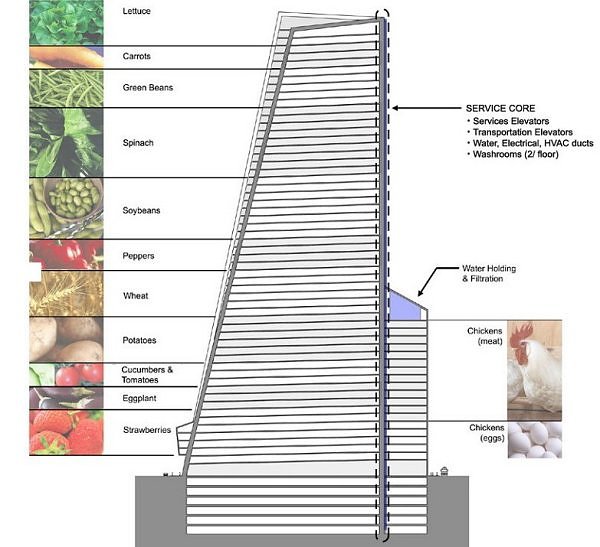
Sky farms are quite literally multilevel agricultural farms, much like
skyscrapers. These sky farms are springing up all over the world, and the
economics of sky farming are already showing positive results. Sky farming
is basically a form of hydroponic farming. It includes significant potential for
organic farming, and major improvements in water usage efficiency. Sky farms
to involve some logistics and infrastructure, notably provision of in-house water
management systems and electrical services, but these are actually far more
economic than traditional agricultural systems.

Sky farm basics

Sky farms are essentially high-rise buildings. They’re designed to achieve
maximum efficiency in the growth and harvesting of agricultural products of all
kinds.  They’ve already shown significant potential for commercial production.
Many growers are particularly interested in the fact that sky farms also provide
enclosed spaces, which naturally provide significant protection against the
elements, weeds, droughts and insect and fungal pests.

Sky farms and agricultural issues

Because sky farms provide a lot of vertical and cubic space, they can overcome
the limitations of the “two-dimensional” traditional farming environment. It’s
possible that the sky farms may be the solution to the increasing problems
of conflicting land use where urban land is displacing agricultural land and
agricultural land is destroying natural habitat and ecology.

The appalling condition of rural land around the world is a major issue
currently being raised at government and international levels regarding the
sustainability of future food production. Sky farms have the potential to
completely eliminate this problem. Theoretically they can grow more food in
far less space than traditional farming.

The economics of traditional rural land use can also be drastically improved by
sky farming. The fact is that it takes extraordinary amounts of water and soil to
produce basic agricultural products. That situation is definitely not sustainable,
and far more efficient means of food production are desperately required.

Because of the quasi-hydroponic nature of sky farming, water usage can be
improved by up to 200%. Soil degradation can be drastically decreased, due to
the fact that sky farm plants use significantly less soil in their growth media.

Organic growers concerned about the possibility of contamination and cross
pollination of their crops with genetically modified organisms have also
expressed interest in sky farms, which provide enclosed growing habitats for
their products. Sky farming could in fact be a particularly useful method of
ensuring agricultural and botanic genetic lines.

The future of sky farming

The big winners in sky farming will be farmers, consumers and the
environment. Sky farms have so far shown themselves to be very easy to
manage, logistically simpler to operate in terms of crop management, and to
have the potential for significant flexibility in choice of commercial crops.

It may be strange for a while for farmers when they realize that instead
of using a backhoe they’ll have to call an electrician, but the cost savings
and peace of mind may be the greatest breakthrough for farmers since the
Agricultural Revolution.

Sky farming is a very much more efficient, profitable approach to a serious
food supply situation which traditional commercial farming has so far shown
itself to be completely unable to address.