Nano Solar and nanoimprint lithography molds

nanosolar20powersheet

Nanotechnology is great despite what you may have read in the Michael Crichton novel “Prey”.  I suppose the only problem is that our hands are too big.

There has been a new breakthrough in the manufacturing of nano particles and by breakthrough I mean research by college students.  Metallic glass can be used to create a mold that is very durable and suited to casting nano size particles.

The most immediate application for this technology (aside from a space elevator)  would be their use in making nano solar panels.  These nanosolar panels are already being mass produced worldwide but are obviously limited by the time is takes to create atom sized machines.

This is a good segue into why certain kinds of patents are bad.  The worst kind, I just have to mention, is the patenting of Genes and the reasons are endless and I would have thought obvious.  The more relevant kinds of bad patents are the ones that stifle the use of innovative new technologies.  Lets say that this nanoimprint technology discovered by Yale is licensed to an established solar power company.  This seems fine except they didn’t license the technology to use it, they just don’t want to compete with it.

Call it a pre-emptive strike on progress. The new technology will sit on the shelf so the old technology can continue turning a profit.

Oddly enough the same thing often happens in Hollywood.  A major studio will often buy scripts that are similar to something they are producing so as to avoid competition at the box office.

nanoparticles

References:

http://www.technologyreview.com/business/22167/?a=f

http://www.nanosolar.com/index.html

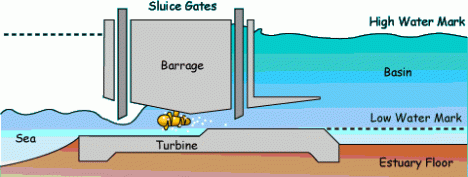
Tidal Power barrages and ebb generation

marine_tech_018

It’s such a simple concept I wonder why it’s not a “popular” idea for alternative energy.

Exploit the difference in potential energy between high tide and low tide.  Dig a ditch or basin into a beach or cliff and then make a dam with flood gates and put some turbines where they will be turned by releasing the trapped water.

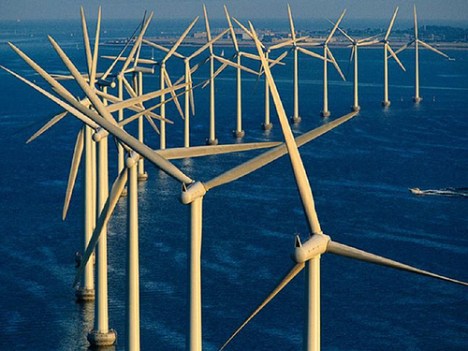
The main advantages of this kind of tidal power vs the more popular idea of turbines trapping underwater currents are environmental. When we look at the design of these windmills under the sea, they are very similar to food processors in that any wildlife coming close will be chopped into slurry.  Not to mention the fact that they would only capture a small fraction of the tidal power compared to a tidal barrage.

It is important to distinguish between tidal barrages created on rivers or estuaries and totally man made barrages.  The former types of barrages have the same kind of environmental problems because they interfere with extablished marine ecosystems.  Creating a new inlet would allow for a screen-like divider that would exclude animals that could be harmed by the turbines or other mechanisms.

The potential is almost unlimited for countries like the united states due to our extremely large coastlines.  The construction of these barrages would also creates lots of jobs a la the Obama plan for saving the economy. 

In the coming years we will have to make important decisions about which technologies we chose to implement for a sustainable future.  If we choose without full disclosure as to the dangers and benefits of each technology, the results could be disastrous.  If we were to make huge investments into bio-fuels instead of more truly sustainable technologies, at some point we will have food and water supply problems.  I understand the appeal of bio-fuels because they use already existing technologies and thus can be immediately implemented.  I also understand the desire for a quick fix but long term thinking is the only way we will survive peacefully into the next century, after oil has run out.

Radiation from the sun, Gravitational pull from the moon (ocean Power), Geothermal from plate tectonics and volcanic activity, and wind power are the areas we should be putting massive investment into.  Other technologies may serve as a fine transition between fossil fuels and true sustainability but we must plan for the long term using inexhaustible sources of energy.

Why we need a Space Elevator

It can be done, we have the technology.

and if that’s not reason enough…

The launching of a Satellite will be a simple and relatively inexpensive proposition. No more Giant expenditures of rocket fuel so comcast can have more premium channels.

Space exploration will be come much less expensive and maybe we can reduce NASA’s budget as well. As interesting as space exploration is, I really don’t see any practical benefits to it, at least not until someone figures out how to travel faster than the speed of light.

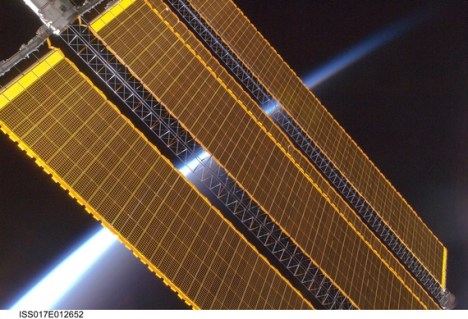
The largest benefits is that Orbiting Solar Arrays could be put into place inexpensively.  These are basically solar panels in space, satellites and the space station are power by the same technologies.  The difference in terms of producing power for earth is that the amount of energy is increased enormously because there is no atmosphere to block the radiation, as well as the fact that they get sun twenty four hours a day.

The elevator would be made of carbon nanotubes and would operate on the principles of centripetal force.

nasasolararray1

BIO-FUELS ARE BAD pt.2

26412_2_468

So in contemplating my thumbs down on bio-fuels, I realize I haven’t been fair by not mentioning where using bio-fuels would be a great idea. 

For example I was reading about these little machines that are being marketing as a home bio-fuel producers. The idea is that people will throw their excess alcohol into this machine and it will be converted to ethanol by what is basically just a mini distillery. This is not a good idea. First of all who has significant amounts of alcohol left over? I know I usually finish a beer I open.  Even if they could be exclusively marketed to frat-houses I imagine the frat boys would just drink the pure ethanol the machine produces

       A good use of the same technology is exemplified by the Sierra Nevada Brewing Company who makes a great IPA among other things.  They will convert their excess bio-waste into ethanol and use that to fuel all their delivery trucks. Brilliant!

There are a great many waste products that could be fermented and distilled into fuel and utilizing that kind of synergy would not only save these companies money but could take a chunk out of fossil fuel demand.

References:

Sierra Nevada

EFUEL

Triple Pundit

BIO-FUELS ARE BAD


…in the long term

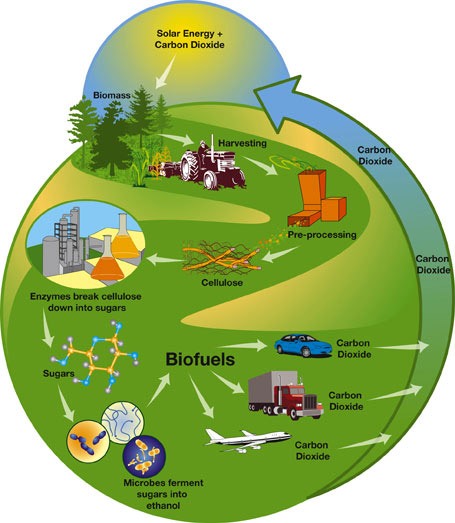
They are really good only as a quick temporary fix, tape when what we really need is glue.  When you do the math, there is simply not enough land (even counting all the forests we have yet to clear) to make this a viable alternative to fossil fuels.

It is also unlikely that we will reach a break even point any time soon in regards to the costs of production vs. those of  global demand. This means that we can only produce bio-fuels using fossil fuels at the cost they are now.  When the prices of oil and coal go up as they inevitably must, it may become impossible for the bio-fuel industry to avoid operating at a loss.

There are many negative environmental factors as well but these are all mostly under debate so I will leave those for a later date.  Bio-fuels will be a useful tool for the transition from fossil fuels to something else but are not useful as they are not truly sustainable.

bio_fuel_conversion_chart

Steel Insulated Panels

 current-proj-image

My father is building a house in Mass out of steel. The walls are made of super insulated steel panels supported by a steel fram and jointed with foam.

He was a little delayed in getting the heating system going but apparently all he need is four space heaters to heat a five thousand suare foot house to 60 degrres while it is -2 F outside.

This was amazing to me because I used to spend enormous amounts of money on oil heat and space heaters and I was still not that warm. 

Here is some general info about these panels: PATH Case Study

Here is the blog on the steel house: Strategy to Design

Into the water

dsc00789

The World Without US by Alan Weisman

This is a non fiction book largely concerning what would happen to the earth if homo sapians suddenly disappeared.  There were two directly competing TV specials on the same topic but the book is obviously much more in depth albeit without great CGI.

The book starts off my examining the only truly primeval forest in Europe, the Bialowieza Puszcza in between Poland and Belarus.  The author then proceeds to examine the world before people, which of our constructions will last longer than others, and the lasting impact of our existence.

The most interesting thing about the world before people is all the various gigantic animals that were hanging out.  Then when we came along and the African animals evolved alongside us and came to understand how dangerous we are. Large animals in other parts of the world had no idea what we can do so they were easy slaughter. This is why there are no elephants and such in the Americas.

The most frightening part of the book was the end times of a nuclear power plant.  Thousands of simultaneous meltdowns all over the world isn’t a very nice picture but I suppose Chernobyl was bad and the deer came back (just don’t look at the mutated offspring).

I did start to imagine what it would be like if I were stuck on a planet without any other people, and then I allow myself a few friends, and the fantasy goes on like that.

Anyway here is a useful fact for everyone:

From the Vienna Institute of Demography of the Austrian Academy of Sciences, Dr. Sergi Scherbov. With regards to population growth, if we continue as is the population on the planet will be 9 Billion by the year 2050 (the current population is 6.5 Billion).  If each fertile female were limited to one child the population would be at 1.6 Billion by 2100.  I don’t think we should limit people’s offspring to one but the numbers how there should be a middle ground.

cape-crack1

The Wind Farm Debate pt 1

offshore-windfarm

I am from Boston and my family has a place in Buzzard’s Bay, near Cape Cod.  The debate around placing an offshore wind farm in the Nantucket sound has been a hot topic for many years in the area.  As in most debates over public policy, the spectrum of opinions runs along a socioeconomic axis.

The more affluent do not want any windmills cluttering their view of the “pristine” ocean and the people who live in the area year round would love a drop in the electricity bills.  The problem with the pristine ocean is that it is full of garbage and chemicals.

I am twenty-four years old and I can clearly remember a time when you could walk down to the ocean near my house and pick up as many mussels, oysters, and clams as you wanted.  Now there is nothing on the shore except barnacles and seaweed.  You could hit a deer by accident easily because there were tons of them all around. Now you would be lucky to see one all summer.  Greenbrier, poison ivy and other resilient horrible weeds have taken over from roses and blueberry patches.  The point is that toxic chemicals and invasive species have done far more damage to the pristine ocean than a wind farm could ever do.  This is in addition to the fact that wind farms might lessen the oil barge traffic that regularly runs through these waters, even in winter.

The opponants of wind farms need to understand that how the world looks needs to change in order for us to survive and prosper.  If we decide to cut down trees, then we will have to look at windmills instead.

codman-point

Welcome to Grog

It’s a combination of two words…not to belabor the point.

Here is a list of a ton of Green Tech websites, they will be on a blogroll a little later but here’s a peek

http://www.treehugger.com/
http://www.worldchanging.com/
http://www.autobloggreen.com/
http://www.renewableenergyworld.com/rea/home
http://www.grist.org/
http://www.greencarcongress.com/
http://www.inhabitat.com/
http://www.metaefficient.com/
http://www.triplepundit.com/
http://www.realclimate.org/
http://www.celsias.com/articles/
http://www.blog.thesietch.org/
http://www.environmentalgraffiti.com/
http://healthy-lifestyle.most-effective-solution.com/
http://earthfirst.com/
http://earth2tech.com/
http://www.ecogeek.org/
http://ecotechdaily.com/
http://www.unpluggedliving.com/
http://www.lifegoggles.com/
http://www.aboutmyplanet.com/
http://www.greenexpander.com/
http://www.alternativeconsumer.com/
http://www.greatgreengoods.com/
http://www.idealbite.com/
http://www.recyclethis.co.uk/
http://www.naturemoms.com/blog/
http://www.riverwired.com/blog
http://www.thegoodhuman.com/
http://thefraserdomain.typepad.com/energy/
http://jcwinnie.biz/wordpress/
http://geenoptions.com
http://www.theoildrum.com/
http://www.alternative-energy-news.info/
http://www.green-trust.org/wordpress/
http://www.terrapass.com/blog/
http://www.groovygreen.com/groove/
http://blogs.wsj.com/environmentalcapital/
http://www.businessweek.com/investing/green_business/
http://blog.tmcnet.com/green-blog/
http://blogs.zdnet.com/green/
http://blogs.zdnet.com/sustainability/
http://www.energybulletin.net/taxonomy/term/9
http://thefraserdomain.typepad.com/energy/
http://blogs.guardian.co.uk/environment/
http://earth2tech.com/
http://www.informationweek.com/blog/main/archives/green_computing/index.html
http://newsweek.washingtonpost.com/postglobal/energywire/
http://www.sfgate.com/blogs/
http://www.paystolivegreen.com/
http://keetsa.com/blog/
http://www.green-blog.org/
http://cleantech.com/
http://hugg.com/
http://www.electronista.com
http://weburbanist.com/
http://www.independent.co.uk/
http://www.jetsongreen.com/
http://www.enviroblog.org
http://www.inhabitat.com/
http://www.studio7designs.com
http://ecorazzi.com/
http://www.green-trust.org
http://www.motherearthnews.com/
www.homepower.com
http://www.ecosalon.com/
http://www.ucsusa.org/
http://www.greenpeace.org/usa
http://www.earthfirst.com/
http://www.greenoptions.com/
http://www.alternative-energy-news.info/
http://apps1.eere.energy.gov
http://keetsa.com/blog/
cleantechnica.com
http://www.goodcleantech.com/
http://www.greenbang.com/
huddler.com
http://pesn.com/
peakoil.com
energyandcapital.com
greenchipstocks.com
http://weburbanist.com/
http://www.metaefficient.com/
autobloggreen.com
evworld.com
gm-volt.com
biodieselnow.com
renewableenergyworld.com
http://blogs.edf.org/
builditsolar.com
greencar.com