Savor your shrimp as it may be your last, Oil is the new seaweed

I have been wanting to write about the disaster in the Gulf Of Mexico but whenever I tried to learn about the impacts of the oil, the more irritated I got.

So now that I am in a more objective emotional state of mind I will try to asses the future term impacts.  This is just the start as ridiculous amounts of poison gasses liquid, and solids will be pumping into the ocean for several more months.

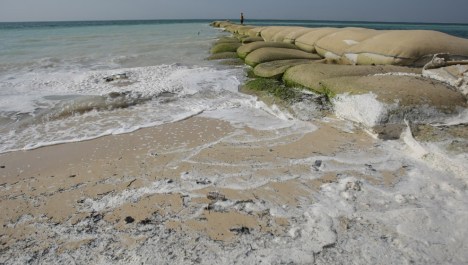
The oil we see washing ashore and being burnt up on top of the water is just the tip of the iceberg so to speak. What is coming out of the bottom of the gulf is a diverse mixture of petroleum with different densities and thus buoyancy.  The vast majority is under the surface mingling with the fishes and shrimp.

Dispersants makes even more oil go underwater but is necessary to protect the coastlines. Either way most of the oil will collect in The Gulf and then the ocean currants will take it around the world, first the North Atlantic, then the South Atlantic, and then on to the Mediterranean, Indian Ocean and Pacific.

The politics surrounding this event are also very disconcerting. This was not a completely unanticipated event.  There has always been the possibility that offshore rigs can be compromised. It is unfortunate that is takes a real disaster to wake people up.

The best shrimp came from the Bayou but I believe those days may already be over.

The Mississippi Meets the oil

Tech Companies Make Push For Home Energy Efficiency

Microsoft Hohm is an online service that makes it possible for consumers to see how much electrical power and gas they use in a given month along with suggestions on how to reduce their consumption.

This application was recently updated with some new features including two dozen behavior recommendations for those who take the time to create a Hohm energy profile and information pages covering every zip code in the United States. Additionally, Hohm now features an energy breakdown dashboard that gives more thorough information about where your household is using the most energy.

Microsoft is not alone in their home energy efficiency efforts. A group of appliance and energy companies that includes Best Buy, Direct Energy, Lennox International, OpenPeak and Whirlpool are working on what they call the Home Energy Management Center. What makes this effort distinctive is that it focuses on homes of all income levels rather than the middle or upper class approach that most other companies are taking.

The Home Energy Management Center is being described as a “command center” for the smart home. It will allow them to manage their energy consumption according to certain predetermined budget levels or operating limits as well as provide access to news, weather, social networking, music and movie applications. It is projected that consumers will be able to save up to 25% on their energy bill every month.

Another company taking a very unique approach to home energy efficiency is EcoFactor. Their system will merge your home energy consumption with information about environmental conditions. The thought behind this system is that the consumer does not necessarily want the temperature of their house set to the same level everyday. The temperature outside may not change very much day to day, but the same temperature can feel different depending on how much moisture is in the air.

These are just a few of the companies that are working hard to cut down home energy consumption. The hope is that in the coming years a wide variety of systems will make it possible for everyone to watch their energy usage regardless of whether or not they can meet the expense of home automation.

This was a guest post from Richard Moyle

For more about monitoring home energy usage visit www.measurementsystems.co.uk

Geothermal energy waste into lithium batteries

Most geothermal energy plants inject water deep into the ground where the earth’s heat energy turns it into steam used to generate electricity.

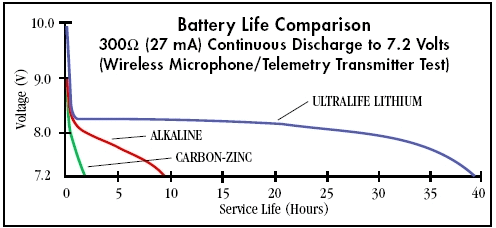
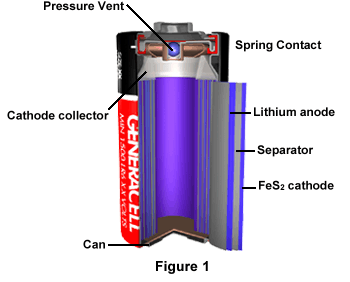
The wastewater from this process is full of elements that are not abundant on the surface and that includes lithium.  Without going too far into battery technology lithium batteries last four times as long as conventional ones and can deliver a lot of energy quickly.  The latter feature is extremely useful for electronics and hybrid cars.  The 150 MPG cars you hear about are made with lithium-ion batteries.

This is a great example of a change needed at the demand level.  Energizer makes them but  the cost makes them a rare purchase despite the advantages.  A synergistic relationship between battery makers and geothermal energy producers is very important. The educated consumer will buy them but needs to realize that you get what you pay for and 99 cent batteries last only hours.

General Electric doesn’t have a very high opinion of the consumer

GE,

I’m disappointed.

I work in a hardware store and we have three basic types of lightbulbs for general use,

Incandescent:  The original Thomas Edison invention, they use 3% of the electricity to produce light and the rest of the electricity produces heat.  Essentially it is a very small fire.

Compact Flourescent (the spiral bulbs) :   A smaller version of the long straight flourescent lights most frequently used in supermarkets, they use about half the electricity to produce the same amount of light as an incandescent. Unfortunately they contain mercury and in a perfect world would be thrown out at a hazardous waste dump.

L.E.D (Light emitting Diode):  An old technology redone is our modern age, they can use 4 watts of electricity to produce the same amount of light as an incandescent 60 watt.  They also last five times as long as anything else.  They cost way too much right now.

So to come up with an “energy efficient” bulb, GE reduced Edison’s 60 watt bulbs to 57  to respond to California’s demand that they waste less electricity.

light-bulb ge 75 watt

bravo

For Sale and Help Wanted Boston 1885

Pollution in the Charles River

chales 2

pollution

I just read a book called Zodiac by Neal Stephanson and I liked it very much mostly because it takes place in Boston, the rivers and harbor which I know quite well.

It made me realize how different things are now in terms of pollution. In the eighties even the Charles and the Inner harbor were totally toxic, and I remember seeing the remnants.

44 Pleasant street in Watertown and behind all buildings to the west of there was poison. The small waterfall directly to the east had shopping cart, plastic bags, and all sorts of unidentifiable trash. I saw a large transistor and battery once.

Me and my friends played in the extensive muck  surrounding the beginning of the smooth Charles, past the tiny waterfall in Watertown.

Creepy trees growing out of slime

All still water a magic petroleum of rainbow colors

sink to the knees take many showers

But now like many places in Boston, IE Southie and the Combat Zone, the river has been gentrified.

Rich folks lead to clean rivers and corners and I suppose it’s not a bad thing, the Charles River in Watertown smells good and in the former combat zone there is nary a hooker or coke dealer to be seen.

The point is that at least in North America (excluding Mexico) the populous seems to have a proper outrage at being poisoned and so at least on the surface, plants can grow again.

charles-river-in-watertown5

Calpine

geothermal geysers

The best  and most plentiful source of power on this planet is geological activity.  I have mentioned this belief before particularly when talking about what exactly the oil companies will do when the oil runs out.

I have recently become a resident of the State of California so instead of trying to cover national companies, I will focus on companies in the Southwest in addition to ones in New England.

This corporation has a longish history of natural gas plants in Wisconsin and the Southwest and has a truly sustainable geothermal plant in Northern California. It is estimated that the development meets 60 percent of the power demand for the coastal region between the Golden Gate Bridge and the Oregon state line.[1]

The Geysers, a geothermal power field located 72 miles (116 km) north of San Francisco, California, is the largest geothermal development in the world. . The Geysers consists of 22 separate power plants that utilize steam from more than 350 producing wells. The Calpine Corporation operates and owns 19 of the 22 facilities. The other three facilities are operated by the Northern California Power Agency and the Western GeoPower Corporation.

It is currently outputting over 750 MW

And I have a great history of the company from someone who knows them well, both from a financial and personal perspective:

Calpine had a hard time of it
because of the nature of the energy business and its proximity to National
Security.  When Enron was overbought and tried to characterize loan
payments to various off-the-books entities such as Chewco and Raptor
(Raptor was also the name of a state of the art jet program at the Defense
Department) as revenue, their competitive entities, the oil companies,
banks, insurers and the U.S. Government, did it in with the Enron Task
Force (ETF is also the acronym for Electronically Traded Funds)–because,
as the saying goes–the public must diversify!).  Anyway, the spill-off
from Enron, 911 and the NYSE shut down by Grasso et al., didn’t help
Calpine to say the least.  Their funding was cut off and Buffett (yes
Warren) demanded pipeline companies carry more insurance coverage due to
the terrorist threat.   It took six years to bankrupt Calpine and in late
2007 they filed Chapter 11.  They emerged from bankruptcy with a five
billion dollar loan in 2008.  They have various properties generating
geo-thermal power and build gas-fired power plants internationally.
Calpine has several “bases” headquarter loci, among them San Jose
California and Houston Texas and have a large Canadian real estate
portfolio including natural gas related interests.

-John

calpine geothermal

Conflicting results

SeaLevelSatellite2000_12we21

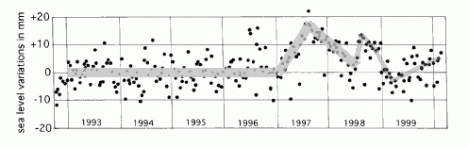
I got some harsh feedback from the last post, particularly because of the idea that sea levels are not rising. The UN hired some scientists to research levels rising and when they found no positive results they were fired and replaced with scientists who found results more in line with the rest of the report.

don’t overestimate our knowledge of the global climate, particularly it’s influences and reactions, very little about the climate is intuitive

the earth is on a much larger time scale, we have existed for the smallest fraction of time and may not be as powerful as we think…I hope not.  Take a look at scenarios showing t what would happen if humans disappeared instantly.

The tides are mysterious, oddly enough in the 19th century we had the tides down to the minute but that’s a secret lost in the modern age.  Perhaps this is because it isn’t necessary  to sail on the tides anymore, I’ve had to do that when a motor broke and it’s quite a pain in the ass.

-we know more about the moon than the ocean

–this is not a reason to think emissions and pollution are not dangerous

at this point all sides of the political debate are throwing out a lot of BS…lots of spin on both sides.

find the studies by Dr. Nils-Axel Mörner, he’s an expert in the field despite the slander of fools.

sea level fall morner

“It offends the human ego that nature is indifferent to our dreams”

This post is somewhat dated, I’ve been moving and haven’t had internet.

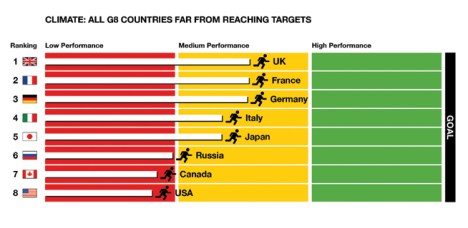
I forget where I heard that quote but if you haven’t guessed it relates to the G8’s “decision” not to allow an increase in global temp of more than 2C

This is dumb because it implies that we have a lot more control over global climate than we do.

Yes reducing carbon emissions would help the planet get back to an equilibrium but whether we can actually stop the current trends initiated more than two hundred years ago is a different question.

It is arrogant to state we have this much control over nature and stupid to assume that we know what will happen as temperatures rise.

Take sea level rise for example, IT IS NOT HAPPENING.  This is not to say we shouldn’t reduce emissions and be clean for the future, just that symbolic goals without any reason to believe we can accomplish them doesn’t seem like the most effective way to change things.

…Particularly not when developing countries (ie the majority of the world) refuse to abide by this “decision”

G8_climaterankingGraphic_z_2

What are China’s Priorities?

There is somewhat of a standoff going on between all the countries in the world over this cap and trade emissions idea.  Most notably is the US and China as we account for 40% of the world’s carbon emissions.

So what happens if we cap our emissions and China does not?

First we should look at what China wants because this is a hard thing to pin down.  It seems clear that the people in charge in China do not put the same value on human life or quality of life.  It follows that they could really care less about the environment or it’s inhabitants and wouldn’t pursue alternative energy on the grounds it poisons the planet.

China does want to be THE new superpower in the world and if they are clever they will have figured out that long term growth will inevitably require alternative energy infrastructure.  China already has some alternative energy initiatives in place.

if we cap and they don’t we could put carbon tariffs in place but that might just lead to a large black market…

So until peak oil declines and coal reserves run out, China won’t actually cap emissions because it is a short term economic restriction. They will invest in alternative energy but like everyone else they will use fossil fuels to the bottom of the barrel.

Of course we might be told that they have capped emissions but like most regulations in China, they will go unenforced.

garbage river